
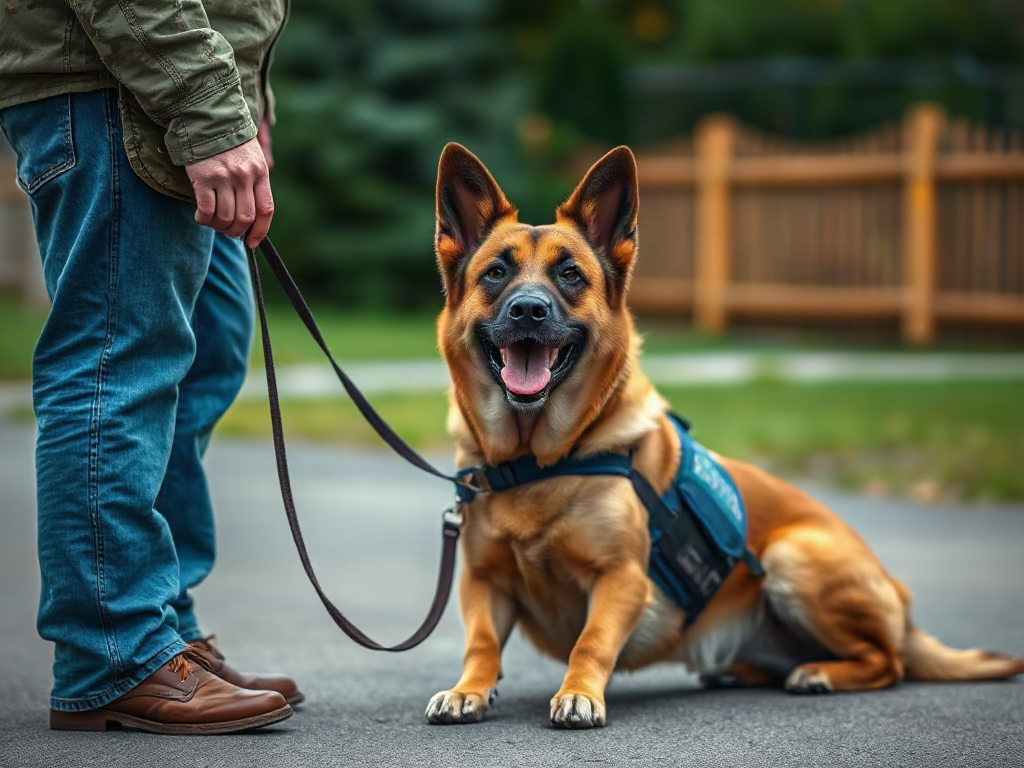
Service dogs help veterans interrupt escalating PTSD reactions by noticing trained behavioral cues, creating a prompt for grounding, and performing tasks such as nudging, blocking, guiding the handler away, or turning on lights during nighttime distress. Their intervention can break the sequence between an early sign—rapid breathing, scanning, freezing, or repetitive movement—and a more intense reaction. Effective support depends on individualized training, reliable handler-dog communication, and a safety plan that does not treat the dog as a replacement for trauma-focused care. Veterans should also account for public-access demands, veterinary costs, fatigue, and situations in which a dog cannot safely respond.
How Escalation Begins and Where a Dog Can Intervene
Escalating PTSD reactions often develop through a recognizable sequence rather than appearing without warning. A veteran may begin scanning a room, tightening the jaw, breathing quickly, losing track of conversation, moving toward an exit, or becoming unusually still. The specific pattern differs by person, but the practical opportunity is similar: an interruption is more likely to help before the reaction reaches panic, dissociation, aggression, or complete withdrawal.
A service dog can be trained to respond to observable cues that occur during this early window. The cue might be pacing, hand rubbing, repeated checking, a change in breathing, or a trained signal from the handler. The dog may then touch the handler, lean against the legs, retrieve an item, guide the person toward a quieter area, or perform another disability-related task. The purpose is not to force the reaction away. It is to direct attention toward a concrete sensory event and a rehearsed next action.
For example, a veteran who becomes increasingly alert in a crowded store might notice the dog nudging a hand. That contact can prompt the veteran to identify the surroundings, slow the breath, and move to a planned low-stimulation location. A pet dog may offer comfort, but a service dog’s value in this situation comes from a specific, trained response tied to the handler’s functional impairment. The distinction matters when deciding what kind of training and support are needed.
How service dogs help veterans interrupt escalating PTSD reactions depends less on dramatic intervention than on timing. A dog that reacts only after the handler is overwhelmed may be affectionate but poorly matched to the intended task. Veterans and trainers should identify the earliest reliable cues, test them in realistic settings, and measure whether the response leads to a safer, more controlled choice.
Trained Tasks That Create a Break in the Reaction
Task training gives the interruption a practical form. Common PTSD-related tasks may include tactile interruption, waking a person from trauma-related nightmares, creating space in a crowd, guiding the handler to an exit, retrieving medication or a phone, and turning on lights when darkness contributes to distress. Not every task fits every veteran, and a longer task list is not automatically a better plan.
Tactile contact can be useful when internal distress is difficult to recognize. A nose touch or paw target provides a noticeable external signal without requiring another person to ask what is wrong. Pressure-based contact may feel regulating for some handlers, while others find unexpected weight uncomfortable or triggering. The dog’s size, positioning, and release cue therefore need to be selected with the veteran’s physical history and preferences in mind.
Blocking and positioning tasks require especially careful boundaries. A dog might stand behind the handler to discourage someone from approaching too closely, but it should not threaten, lunge, or act as a protection animal. A dog trained to create space must remain responsive to the handler, safe around the public, and able to disengage when the situation changes. Assuming that a service dog will defend its handler can create dangerous expectations and interfere with legitimate task work.
Nighttime assistance illustrates the difference between a useful task and a vague promise. If nightmares are the concern, the training goal might be waking the handler after a defined behavioral pattern, followed by a practiced grounding routine. The dog cannot diagnose a nightmare or guarantee uninterrupted sleep. A veteran may still need clinical treatment for nightmares, sleep disruption, or medication effects. The animal adds a prompt and a pathway back to orientation; it does not replace medical assessment.
A focused task plan usually prioritizes two or three high-value responses:
- an early interruption that the veteran can recognize and reward;
- a movement or exit task for crowded or threatening-feeling environments; and
- a recovery task, such as retrieving a phone or guiding the handler to a designated quiet space.
Each task should have a clear cue, a defined completion point, and a backup response if the dog is tired, ill, distracted, or unavailable.
Matching the Dog’s Work to the Veteran’s Actual Triggers
Successful matching begins with the veteran’s daily pattern, not with a breed stereotype or a general promise that dogs are calming. A trainer should learn which settings produce difficulty, what the earliest observable behaviors look like, how quickly reactions intensify, and what the veteran can still do during that period. A task that sounds appropriate in a quiet training room may fail in a parking garage, airport, clinic, or family gathering.
Consider two different needs. One veteran may become disoriented in unfamiliar buildings and benefit from a dog trained to guide them toward a known exit or a quieter area. Another may remain physically still while experiencing intense internal distress and need a subtle tactile prompt followed by a grounding routine. Giving both handlers the same “alert” behavior overlooks the difference between visible agitation and concealed dissociation.
Reliability also depends on whether the dog’s natural behavior can be shaped into a consistent task. A dog that startles at traffic noise, avoids elevators, or becomes overexcited around strangers may not be suitable for demanding public work, even if it is gentle at home. Temperament, stamina, environmental recovery, trainability, and the veteran’s physical ability to handle the dog should be assessed together. A smaller dog may be easier to transport, while a larger dog may be better suited to certain positioning tasks; neither choice is universally correct.
Veterans should keep a brief reaction log before finalizing the training plan. Record the setting, first noticeable cue, approximate escalation speed, task attempted, result, and recovery time. The log can reveal that a dog is most useful during transitions, shopping, sleep disruption, or visits with unfamiliar people. It can also expose a mismatch: if the dog’s alert arrives too late, increases attention from bystanders, or interrupts a coping method that already works, the task needs revision rather than blind repetition.
A task-based approach to service dogs is more precise than treating the animal as continuous emotional support. A dog may be comforting without performing a trained disability-related task. That comfort can matter, but it should not be confused with guaranteed interruption, symptom reduction, or protection from every trigger.
Limits, Safety Concerns, and Signs the Plan Needs Adjustment
A service dog can provide an external prompt, but the handler remains responsible for the next decision. The dog may miss a cue, react to an unrelated distraction, become exhausted, or be unable to work in a medical or emergency setting. Veterans should maintain human and clinical supports, carry a phone or identification plan when appropriate, and know which grounding actions to use if the dog cannot respond.
Public access creates practical pressure that is easy to underestimate. Crowded sidewalks, food smells, loud vehicles, children seeking contact, and repeated questions from strangers can tax the dog and the handler simultaneously. A dog that works well at home may need gradual exposure before entering complex public environments. Short sessions with planned exits are usually more informative than a single exhausting outing intended to prove readiness.
Watch for signs that the arrangement is failing. The dog may show persistent avoidance, panting unrelated to heat, freezing, hypervigilance, poor appetite, or difficulty settling after work. The veteran may begin depending on the dog for every uncomfortable situation, stop practicing independent coping skills, or become more distressed when the dog is not present. These patterns call for a trainer, veterinarian, or mental-health professional to review the plan. They are not evidence that the veteran has failed.
Safety also includes physical contact. Pressure, blocking, or waking tasks should never cause pain, restrict breathing, interfere with mobility, or place the dog between people during conflict. A response that attracts confrontation or encourages the handler to use the dog as a shield may increase risk. The safer alternative is often a low-profile interruption paired with movement toward staff, a companion, an exit, or another predetermined support.
Veterans considering a dog should budget for food, veterinary care, equipment, training refreshers, boarding, and periods when the animal is unavailable. The emotional benefit may be substantial for an individual, but the daily workload is real. A well-matched dog is a working partner, not an always-on emergency device.
Building a Reliable Daily Response Plan
Training becomes more useful when every interruption connects to a short, rehearsed sequence. The dog’s behavior should tell the veteran what to do next, rather than merely signaling that something is wrong. A workable sequence might be: acknowledge the touch, name five visible objects, slow the exhale, move to a designated location, and contact a support person if recovery does not begin.
Practice should progress from predictable settings to realistic ones. Start with the behavior and reward structure in a quiet environment, then add mild distractions, brief public outings, and carefully selected situations that resemble the veteran’s triggers. Trainers should adjust one variable at a time. Increasing noise, distance, duration, and crowd density all at once makes it difficult to determine whether the task or the environment caused a setback.
Use simple measures to judge whether the plan is working: Did the dog respond before the reaction peaked? Could the veteran complete the next grounding action? Did recovery take less time, or did the task create more confusion? Improvement may mean recognizing escalation earlier, leaving a setting without shame, or regaining enough orientation to communicate. It does not require the disappearance of every reaction.
Veterinary care and behavioral maintenance belong in the plan. Pain, illness, aging, poor sleep, or inconsistent reinforcement can change a dog’s reliability. A handler should have a temporary alternative for workdays, appointments, travel, and recovery periods. Clinical care should continue alongside task training, particularly when reactions involve self-harm risk, severe dissociation, substance use, or threats to others.
Choosing the next training step is easiest when the veteran identifies one recurring scenario, one early cue, and one safe task. That narrow starting point produces clearer feedback than attempting to train the dog for every possible reaction. If the task repeatedly fails, revise the cue, environment, or expectation before adding complexity.
Veterans can compare program information through the U.S. Department of Veterans Affairs, consult a licensed mental-health professional about ongoing PTSD care, and ask prospective service-dog organizations to explain task training, follow-up support, health screening, and handler responsibilities in writing.
Frequently Asked Questions
Can a service dog sense a PTSD reaction before the veteran does?
A dog may be trained to respond to observable changes such as pacing, breathing, or repetitive movement, but no dog can be assumed to detect every reaction accurately. Training should pair the behavior with a clear task and handler response.
What tasks are commonly used for escalating PTSD reactions?
Examples include tactile nudging, guiding the handler to a quieter location, creating space without aggression, retrieving a phone, turning on lights, and waking the handler after a defined nightmare-related pattern.
Can a service dog replace PTSD treatment?
No. A dog may provide prompts and functional assistance, while therapy, medication management, crisis planning, and other clinical care address the broader condition.
What if the dog reacts too late?
Review whether the trained cue is observable early enough, whether the environment is too difficult, and whether the dog is tired or distracted. A qualified trainer may need to change the cue, task, or progression.
Should every veteran with PTSD get a service dog?
No. Suitability depends on functional needs, housing, finances, physical capacity, willingness to maintain training, and access to other supports. Some veterans may benefit more from therapy, coping tools, or a different assistance arrangement.
Conclusion
A service dog can interrupt an escalating PTSD reaction by converting an early behavioral cue into a trained, physical prompt and a safer next action. The strongest plans are specific: they identify the veteran’s first signs, assign a task that fits the setting, and rehearse what happens after the dog responds. Public behavior, fatigue, cost, health, and backup support deserve as much attention as the initial training. Veterans should begin with one recurring scenario, involve qualified training and clinical professionals, and track whether the dog’s response improves orientation and decision-making. A dog can be a valuable working partner, but dependable recovery still rests on a broader plan that remains usable when the animal is unavailable.