
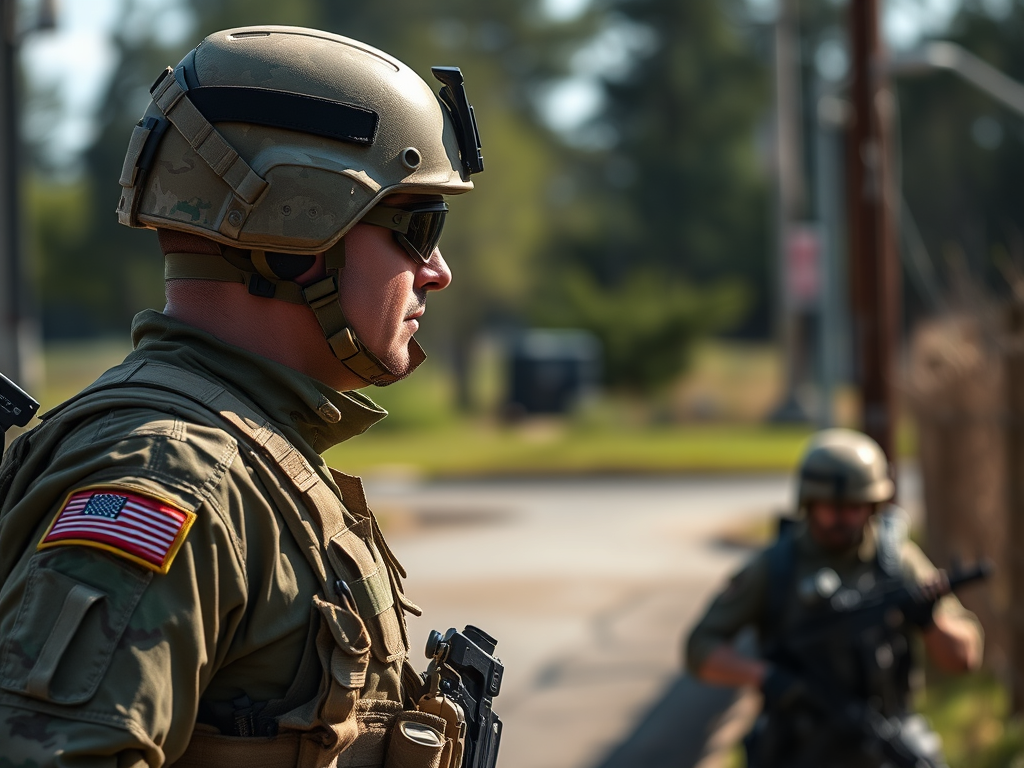
Combat veterans may mistake hypervigilance for safety because constant threat scanning once helped them detect danger, control uncertainty, and protect others, even though that response can remain active in ordinary settings. The brain may interpret tension, repeated checking, guarded positioning, and difficulty relaxing as evidence of preparedness rather than signs of an overactive alarm system. That belief can reinforce sleep disruption, irritability, avoidance, and strained relationships. Recognizing the difference between useful awareness and exhausting vigilance allows a veteran to test safer alternatives gradually, record what actually happens, and discuss persistent symptoms with a trauma-informed clinician rather than stopping protective habits abruptly.
Why Hypervigilance Can Feel Protective
Hypervigilance is a state of heightened attention to possible threats. For a combat veteran, it may include scanning entrances, tracking unfamiliar sounds, sitting where every exit is visible, monitoring other people’s hands, or waking at small noises. Those actions are not random quirks. They can reflect a nervous system shaped by environments where rapid detection and immediate response had genuine survival value.
The difficulty begins when a response learned under combat conditions is carried into a setting with different levels of danger. The body may remain tense, the mind may search for anomalies, and relief may feel unsafe because relaxation is interpreted as losing control. A quiet restaurant can therefore produce more discomfort than a noisy one if quietness leaves room for imagined threats. Repeated checking may briefly lower anxiety, which teaches the brain that checking was necessary, even when no danger was found.
That short-term relief is a crucial mechanism. If a veteran checks the locks six times and then feels calmer, the nervous system may connect the checking behavior with safety. The conclusion is understandable but incomplete: “I became safe because I checked,” rather than “My anxiety fell after I checked.” The distinction matters because the first belief encourages more checking, while the second invites careful testing of whether the behavior is truly needed.
Hypervigilance also offers a sense of identity and responsibility. A veteran who was trained to notice risk may feel negligent when someone else is relaxed. Family members may misread guarded behavior as anger or distrust, while the veteran experiences it as protection. Neither interpretation should be accepted automatically. The useful question is whether the response fits the present environment and whether it improves judgment, sleep, connection, and functioning.
How Threat Scanning Becomes a Safety Belief
Combat experience can condition attention toward rapid threat detection, but conditioning is not the same as permanent damage or a personal failing. The brain learns from repeated pairings: a sound followed by danger, an unfamiliar movement followed by an attack, or a moment of inattention followed by a serious consequence. Later, similar cues may trigger an alarm before conscious reasoning has time to evaluate the situation.
Memory can strengthen the belief that vigilance prevented disaster. A veteran may remember the occasions when noticing a change in tone or movement mattered, while ordinary moments of relaxed attention remain less memorable. This creates an uneven comparison. The mind counts the successful alerts but rarely counts the thousands of false alarms. The result can be a strong conviction that constant monitoring is the only responsible posture.
Consider a veteran who always chooses a seat facing the door. If the choice makes it possible to enjoy a meal, it may be a reasonable accommodation. If refusing any other seat causes panic, arguments, or avoidance of restaurants altogether, the behavior has become a rigid safety rule. The issue is not the chair itself; it is the prediction attached to it: “If I cannot see the door, something bad will happen and I will be unable to respond.”
Other safety beliefs may involve carrying excessive supplies, avoiding crowds, keeping a weapon immediately accessible, staying awake to monitor the home, or requiring family members to report every change in plans. Some precautions may be lawful and appropriate, while others may increase risk through exhaustion, impulsive reactions, or conflict. Comparing a flexible precaution with an inflexible rule helps clarify the tradeoff. Flexibility leaves room for context; hypervigilance treats every context as hostile.
A useful observation exercise is to write down the prediction before a low-risk situation: what danger is expected, what action is supposed to prevent it, and what actually occurs. The purpose is not to disprove a veteran’s experience or force sudden exposure. It is to separate evidence from an alarm signal and identify which behaviors protect current safety versus which mainly reduce uncertainty for a few minutes.
Recognizing When Vigilance Has Stopped Helping
Hypervigilance may be functioning as a problem rather than protection when it consumes attention, narrows daily choices, or produces consequences that outweigh its practical value. Warning signs can include persistent scanning in objectively ordinary places, startling easily, sleeping lightly because of monitoring, irritability when others make normal movements, and an inability to enjoy time with family without tracking exits or sounds.
The clearest test is functional: does the behavior improve a real safety decision, or does it mainly prevent the veteran from feeling uncertain? A parent who checks a child’s location once according to an agreed plan is using information for coordination. Repeatedly demanding updates because silence feels intolerable may maintain anxiety without adding meaningful protection. A homeowner who locks doors according to a normal routine is taking a practical precaution. Rechecking them throughout the night may sacrifice sleep while offering little additional security.
Another clue is the rebound effect. Constant monitoring can make the nervous system more sensitive, not more settled. Poor sleep lowers the threshold for irritability and startle responses. Fatigue then makes ambiguous cues harder to interpret, which leads to more scanning. Family conflict may increase because others feel watched or controlled, and the resulting tension can be misread as proof that the environment is unsafe.
Common mistakes include treating every alert as accurate, assuming discomfort proves danger, and abandoning all precautions at once. The opposite mistake is dismissing the veteran’s concern as “overreacting.” A better comparison asks whether a behavior is proportionate, flexible, and effective. If a specific precaution can be explained in plain terms and stopped when conditions change, it may be adaptive. If it must be repeated, expanded, or defended despite mounting costs, it deserves closer attention.
Use a compact check before changing a habit:
- Trigger: What specific cue activated the alarm?
- Prediction: What does the mind say will happen?
- Action: What monitoring or avoidance follows?
- Result: Did the action address a measurable risk or only reduce distress briefly?
- Cost: What did it take from sleep, concentration, relationships, or independence?
This record is not a diagnostic tool. It is a way to notice patterns that can be discussed with a qualified provider.
Replacing Constant Monitoring With Calibrated Safety
Calibrated safety means matching a response to the present level of risk rather than treating every uncertain cue as a combat-level threat. The goal is not careless relaxation. It is maintaining reasonable awareness while allowing the nervous system to stand down when evidence supports doing so.
Change works better when it is gradual and specific. A veteran might choose one low-risk habit, such as checking the front door once instead of repeatedly, and observe the outcome. Another person may practice sitting with a partial view of an exit for a short meal, provided the setting is genuinely safe and the exercise has been planned with clinical support if distress is substantial. The relevant measure is not whether anxiety disappears immediately. It is whether the person can remain present, allow discomfort to rise and fall, and discover that extra checking was not required for the situation to remain safe.
Grounding can help redirect attention from imagined future threats to current information. Naming the date, identifying the room, feeling both feet on the floor, and noticing several neutral details can interrupt automatic scanning. Slow breathing may reduce physiological arousal for some people, but it should not be presented as a command to calm down. If breath-focused exercises increase distress, a sensory or movement-based method may be a better fit.
Household agreements can reduce repeated reassurance cycles. A couple might agree on one check-in time during an evening out, define what counts as an actual emergency, and avoid turning every anxious question into a lengthy debate. Predictable routines are different from surveillance: a routine has a clear purpose and stopping point. Flexibility can then be practiced by changing one small detail, such as accepting a delayed text without escalating contact.
Signs of progress include recovering more quickly after a startle, sleeping for longer stretches, making plans without extensive escape calculations, and distinguishing “I feel unsafe” from “I have evidence of danger.” Signs that the approach is failing include escalating panic, unsafe behavior, substance use to force relaxation, or severe sleep loss. Those signals call for adjustment and professional input, not tougher self-discipline.
When Professional Help Should Enter the Plan
Persistent hypervigilance deserves clinical attention when it interferes with sleep, work, relationships, driving, public activities, or the ability to feel at home. A trauma-informed mental health professional can help examine the original learning history, current triggers, avoidance patterns, and safety behaviors without treating the veteran’s protective instincts as foolish or shameful.
Therapy may involve approaches designed for trauma-related symptoms, but the appropriate treatment depends on the person’s history, current stability, preferences, and other conditions. A clinician can also assess whether depression, panic, substance use, pain, traumatic brain injury, medication effects, or sleep disorders are contributing to the alarm state. Self-help observations can inform that conversation, but they cannot establish a diagnosis.
Urgent help is appropriate when someone may harm themselves or another person, cannot remain safe, is severely impaired by sleep deprivation, or is experiencing extreme agitation or loss of contact with reality. In the United States, calling or texting 988 connects people with the Suicide & Crisis Lifeline; emergencies should be directed to local emergency services. Veterans can also contact the Veterans Crisis Line by dialing 988 and pressing 1. People outside the United States should use their local crisis service.
A first appointment may be more productive if the veteran brings concrete examples rather than a broad label. Note where scanning occurs, what the body does, what the person predicts, how long the episode lasts, and what it costs afterward. Mention any weapons access, alcohol or drug use, nightmares, anger, and periods of not sleeping. Those details help a clinician distinguish a manageable habit from a broader safety concern.
Support from family should focus on collaboration rather than forced reassurance. A relative can ask, “What evidence of immediate danger are you noticing?” and “Would you like help making a plan for this setting?” Avoid mocking the behavior or secretly removing chosen precautions. Respectful communication creates better conditions for testing flexible responses and protects the relationship while treatment decisions are made. Readers seeking related context can review why combat veterans may mistake hypervigilance for safety alongside information about why combat veterans may mistake hypervigilance for safety in connected PTSD education.
Frequently Asked Questions
Does hypervigilance mean a veteran is actually in danger?
Not necessarily. Hypervigilance signals heightened threat detection, but the feeling of danger may persist when current evidence does not show an immediate threat.
Why can relaxing feel unsafe after combat?
Relaxation may have become associated with reduced readiness, especially if past danger followed moments of lowered attention. That learned association can make calm feel unfamiliar or risky.
Should a veteran stop all safety checks?
No. Reasonable precautions should not be abandoned abruptly. A clinician can help distinguish proportionate routines from repeated checking and plan gradual changes where appropriate.
Can family members make hypervigilance worse?
Repeatedly arguing, mocking, or providing endless reassurance may intensify distress. Calm questions about evidence, agreed check-in routines, and respectful boundaries are usually more constructive.
When should a veteran seek professional help?
Seek help when scanning or checking disrupts sleep, relationships, work, or daily activities, or when anger, substance use, severe exhaustion, or safety concerns appear.
Conclusion
Combat-related hypervigilance can feel like responsible protection because it developed from real conditions in which fast threat detection mattered. Current safety, however, depends on more than readiness: it also requires sleep, flexible judgment, recovery after alarms, and the ability to participate in ordinary life. Notice whether a precaution is proportionate and repeatable by choice, or whether anxiety demands that it expand. Record triggers and predictions, test only low-risk changes, and avoid abrupt experiments that could create danger or overwhelm. Persistent symptoms are a sound reason to consult a trauma-informed clinician, not evidence of weakness. The practical aim is calibrated awareness: enough attention to respond to genuine risk, with enough recovery to recognize when the present is no longer the battlefield.