
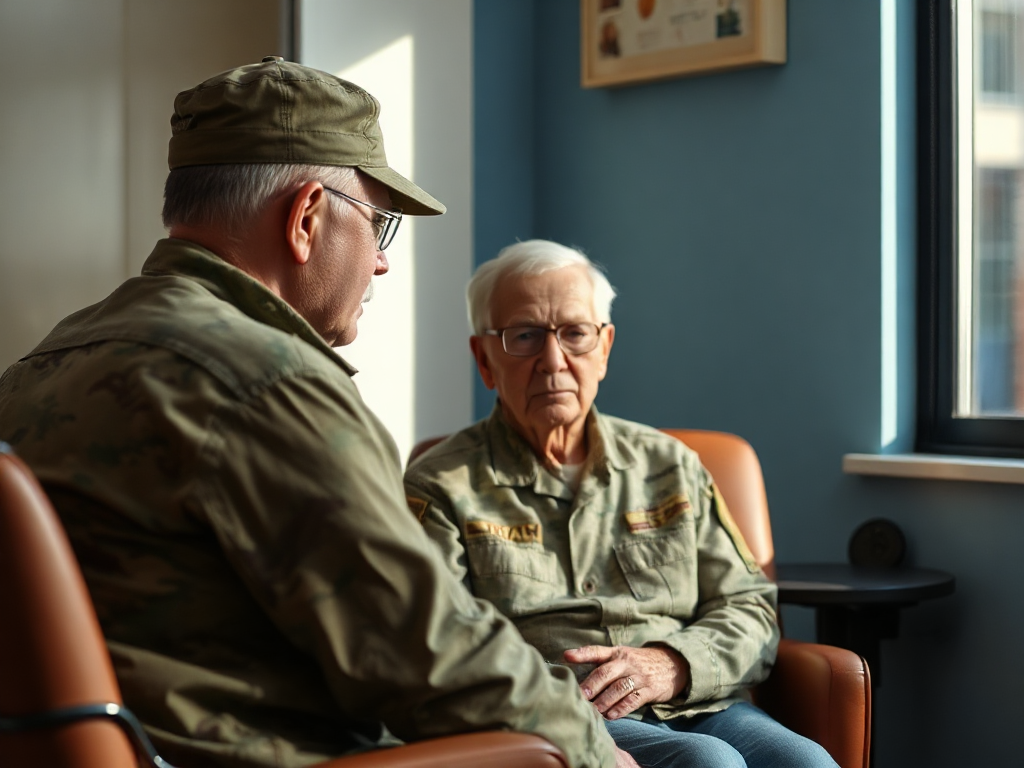
Veterans with PTSD who cannot tolerate group treatment settings may do better with individual trauma therapy, a slower intake process, telehealth, or carefully structured one-to-one support that reduces crowding, exposure, and loss-of-control triggers. Group distress can stem from hypervigilance, shame, irritability, sensory overload, traumatic reminders, or fear that personal information will not remain private. A clinician can assess whether the barrier is the group format itself, a temporary symptom flare, or an untreated crisis such as severe insomnia or substance use. Avoid treating group refusal as lack of motivation; the safer plan is to preserve treatment access while adjusting pace, setting, therapist contact, and coping support.
Why Group Treatment Can Feel Unsafe
Group treatment can activate the same threat-monitoring system that trauma therapy is intended to calm. A veteran may scan exits, track other participants’ movements, react to sudden sounds, or remain focused on whether someone nearby seems unpredictable. The room may be clinically safe, yet the body can interpret several unfamiliar people, limited privacy, and emotional disclosures as conditions requiring defense.
Different mechanisms can produce the same outward response. Hypervigilance may make seating arrangements and blocked sightlines intolerable. Shame may make speaking about combat, military sexual trauma, moral injury, or family conflict feel dangerously exposing. Irritability and sleep deprivation can reduce the capacity to filter conversation. A participant may also fear being triggered by another veteran’s story, accent, clothing, injury, or description of an event.
For example, someone who can speak calmly with a clinician in an office may become tense when another participant raises their voice. Leaving the group does not prove that therapy is unwanted; it may show that the setting exceeded the person’s current window of tolerance. The relevant question is not whether the veteran should simply endure the room. It is which feature created the overload and whether that feature can be modified safely.
A common mistake is labeling group avoidance as resistance before assessing the details. Ask what happens before, during, and after attendance: racing heart, dissociation, anger, panic, intrusive memories, fear of judgment, or several nights of worsening sleep. Also identify whether the problem occurs in every shared setting or only in trauma-focused groups. Someone who tolerates a small skills class may not tolerate a large disclosure-based session.
Those distinctions guide the next decision. A temporary symptom spike may call for stabilization and a medication or sleep review with a qualified clinician. A persistent privacy concern may favor individual care. Immediate danger, suicidal thoughts, threats toward others, severe intoxication, or inability to remain safe requires urgent professional help rather than a treatment-format experiment.
Individual and Lower-Stimulation Alternatives
Individual treatment is often the most direct alternative when shared space, public disclosure, or unpredictable conversation blocks participation. One-to-one therapy allows the clinician to control pacing, explain each exercise before using it, and notice early signs of dissociation or escalating arousal. Trauma-focused approaches may still be considered, but the timing and form should be determined collaboratively rather than imposed because a group was unsuccessful.
Lower-stimulation options can include a quiet clinic appointment, telehealth from a private location, a shorter first session, or a clinician who begins with symptom management and trust-building. Telehealth is not automatically easier: home privacy may be limited, internet failures can interrupt connection, and some veterans feel less grounded when speaking through a screen. A private office is not automatically better either if travel, waiting rooms, or unfamiliar staff are major triggers.
Peer support does not have to mean a conventional therapy group. A veteran may prefer a trusted peer specialist, a family session, a couples appointment, or a structured conversation with one other participant after individual preparation. These formats trade the broader identification available in a group for greater control and confidentiality. They may also place more responsibility on the clinician to prevent isolation from becoming the default treatment plan.
Useful options to discuss with a provider include:
- Individual trauma therapy with planned pauses and a clear grounding procedure.
- Skills-focused sessions addressing sleep, anger, panic, dissociation, or concentration before trauma processing.
- Telehealth or appointments at quieter times when crowded waiting areas are avoidable.
- A peer-support contact or family session that does not require public disclosure.
- A gradual, optional return to a small group after the veteran has identified specific triggers and coping signals.
The goal is not to find the least challenging option forever. It is to find a format in which the veteran can remain present long enough to use treatment. A treatment plan that looks intensive on paper but leads to repeated cancellations may be less useful than a modest plan attended consistently. Share the exact barrier with the referral source, including whether the difficulty involves noise, proximity, confidentiality, trauma stories, authority dynamics, or fear of losing control.
Readers comparing options may also benefit from reviewing veterans with PTSD who cannot tolerate group treatment settings alongside information about veterans with PTSD who cannot tolerate group treatment settings when discussing an individualized referral.
Building a Treatment Plan Without Forcing Exposure
A workable plan begins with a specific formulation, not a demand to attend. The clinician and veteran can map the sequence: a crowded hallway leads to scanning; scanning increases muscle tension; a loud disclosure triggers a combat memory; the veteran leaves; short-term relief then strengthens avoidance. Mapping the sequence makes it possible to change one link at a time rather than treating the entire setting as a personal failure.
Early sessions may prioritize predictable routines, grounding, emotional labeling, sleep assessment, and a plan for what to do if arousal rises. That does not mean trauma processing is being abandoned. It means the person needs enough stability to distinguish present-day clinical discomfort from an actual threat. A prearranged pause, an exit that does not require explanation, and an agreed signal for dissociation can make participation more realistic.
Forced exposure can backfire when the veteran has no meaningful choice, does not understand the exercise, or is already outside a manageable arousal range. Avoidance can also become so broad that every treatment setting is rejected. The balanced approach is collaborative testing: choose a small change, define what would count as tolerable, and review the result without treating discomfort as failure.
Consider a veteran who cannot enter a group room but can speak with a therapist by video. The first target might be a ten-minute appointment with the camera positioned to show the private room, followed by a discussion of the reactions that arose. Later, the veteran might visit the clinic outside group hours, meet the facilitator individually, or sit near an exit for a brief orientation. Each step should be voluntary, clinically appropriate, and reversible if symptoms become unsafe.
Before agreeing to a plan, clarify:
- Which exact feature of group treatment causes the strongest reaction?
- What physical or emotional signs indicate rising distress?
- What will the clinician do if the veteran becomes dissociated, panicked, or angry?
- Which alternative preserves treatment contact while reducing unnecessary stimulation?
- How will progress be reviewed, and what would justify changing providers or formats?
One weak assumption is that the veteran must choose between a large group and no care. Veterans health services, community mental-health clinics, and private practices may offer different session sizes, clinicians, locations, and delivery methods, although availability varies. Ask directly about individual trauma treatment, peer specialists, telehealth, intake accommodations, and wait times. If the first referral cannot provide a suitable format, request another option instead of interpreting the mismatch as proof that treatment cannot work.
How to Judge Progress and Change Course
Progress should be measured by usable functioning, not by whether group attendance occurs at all costs. Relevant signs include arriving for scheduled care, recovering more quickly after a trigger, describing symptoms with greater precision, sleeping somewhat more consistently, using a grounding skill before leaving, or maintaining contact after a difficult session. A veteran may still dislike groups while making meaningful gains through individual treatment.
Failure signals deserve equal attention. Repeated cancellations, escalating nightmares after sessions, increased substance use, prolonged dissociation, severe agitation, or a growing belief that treatment is punishment suggest that the plan needs review. These signs do not automatically mean trauma therapy is wrong; they may indicate excessive pace, an unsafe therapeutic relationship, inadequate stabilization, untreated medical issues, or a setting that remains poorly matched.
Compare a format problem with a treatment problem. If distress appears only in crowded groups but individual appointments are productive, changing the setting may solve the access barrier. If the veteran cannot remain engaged with any clinician, the priority may be trust, crisis care, sleep, medication review, substance-use support, or a broader assessment. A clinician should make those distinctions with the veteran rather than relying on attendance records alone.
Practical follow-up can be simple. After each appointment, record the setting, the strongest trigger, distress during the session, recovery time, and one thing that made participation easier or harder. Bring that information to the next visit. It can reveal whether a quieter room, shorter session, different therapist, transportation adjustment, or slower trauma-processing pace is making a measurable difference.
Confidentiality and safety questions should be answered before disclosure begins. Ask who can access records, how telehealth privacy is handled, what happens during a crisis, and whether family or peer involvement is optional. Treatment should respect the veteran’s autonomy while still addressing serious risk. If someone may harm themselves or another person, cannot care for basic needs, or is in immediate danger, contact emergency services or a crisis resource in the relevant location rather than waiting for the next appointment.
For additional context, the phrase veterans with PTSD who cannot tolerate group treatment settings should be discussed with a licensed mental-health professional who can assess symptoms, risks, preferences, and available care rather than applying a single pathway to every veteran.
Frequently Asked Questions
Does refusing group therapy mean a veteran is refusing treatment?
No. The group environment may trigger hypervigilance, shame, sensory overload, or fear of disclosure. Discussing the specific barrier can identify an individual or lower-stimulation alternative.
Can individual therapy treat PTSD effectively?
Individual therapy can provide access to evidence-informed PTSD care while allowing closer control of pacing, privacy, and triggers. The appropriate method depends on symptoms, safety, preferences, and clinician assessment.
Is telehealth a good option when groups feel intolerable?
Telehealth may reduce crowded waiting rooms and unpredictable interactions, but privacy, technology, and feeling disconnected on screen must be assessed before choosing it.
Should a veteran be pushed to attend a group anyway?
Pressure can increase avoidance or damage trust. A clinician may discuss gradual, voluntary steps only after identifying triggers, establishing safety procedures, and confirming that group participation is clinically appropriate.
What should someone do if PTSD symptoms become dangerous?
Immediate suicidal intent, threats toward others, severe confusion, or inability to remain safe requires urgent help through local emergency services or a crisis line. Do not wait for a routine therapy appointment.
Conclusion
Group treatment is one delivery format, not a test of commitment or the only route to PTSD care. Veterans who cannot tolerate it should identify the precise trigger, share that information with a qualified clinician, and consider individual therapy, telehealth, skills-focused care, or carefully structured peer contact. The best plan is one the veteran can attend, understand, and use without ignoring serious safety concerns. Track recovery time, sleep, cancellations, dissociation, and day-to-day functioning so the treatment team can adjust pace or setting based on actual effects. If the first referral offers no workable alternative, request a different clinician or service rather than abandoning care. Immediate danger calls for urgent assistance, not a gradual treatment experiment.