
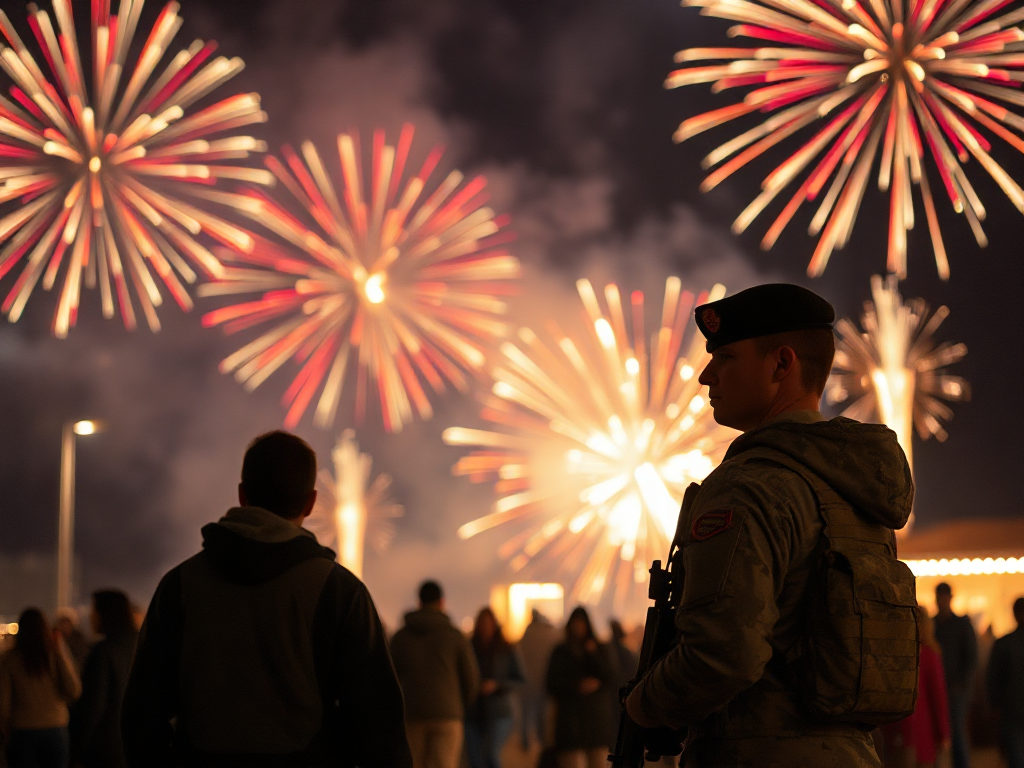
PTSD symptoms triggered by fireworks despite no direct combat exposure can occur when sudden blasts, flashes, smoke, or crowded celebrations activate the brain’s threat system after another traumatic experience. A person may experience startle reactions, intrusive memories, panic, dissociation, sleep disruption, irritability, or avoidance even when the fireworks are objectively safe. The most useful immediate response is to move toward a quieter location, reduce sensory input, orient to the present, and use slow breathing without forcing the person to explain the reaction. Repeated episodes, impaired sleep, persistent avoidance, or thoughts of self-harm warrant assessment from a licensed mental-health professional; a fireworks reaction alone does not establish a diagnosis.
How Fireworks Can Activate Trauma Responses Without Combat Exposure
Fireworks can trigger a trauma response through sensory resemblance, unpredictability, and loss of perceived control rather than through any connection to military service. Explosions, rapid flashes, vibration, smoke, alarms, shouting, and nighttime confusion can resemble parts of a previous traumatic setting. The earlier event might have involved domestic violence, sexual assault, a serious vehicle collision, a natural disaster, community violence, medical trauma, childhood abuse, or another frightening experience.
The nervous system does not evaluate a firework with a calm, verbal comparison before reacting. A sharp report may arrive faster than conscious reasoning, causing an automatic startle response, muscle tension, rapid heartbeat, scanning, or an urge to escape. If the sound pattern resembles a crash or gunfire, the brain may treat similarity as a warning signal. That reaction is not evidence that the person is exaggerating, seeking attention, or secretly exposed to combat.
Fireworks also create conditions that make regulation harder. Events often occur after dark, near large groups, with limited exits, alcohol use, loud music, and little control over when the next blast will occur. A person who tolerates a single predictable noise in daylight may react much more strongly when several sensory cues arrive together. The distinction between a startle response and a broader post-traumatic pattern matters: an isolated fright is common, while recurring intrusion, avoidance, negative mood changes, and heightened arousal may deserve clinical evaluation.
A useful interpretation is to focus on the trigger pathway instead of arguing about objective danger. Saying, “You know these are only fireworks,” may be factually true but can leave the person feeling misunderstood. A better response acknowledges the body’s alarm, identifies present-day evidence of safety, and offers a concrete choice such as stepping indoors or moving farther from the launch area. Readers seeking related context can review PTSD symptoms triggered by fireworks despite no direct combat exposure alongside information about trauma-related reactions.
Symptoms to Notice During and After Fireworks
Fireworks-related PTSD symptoms may appear immediately, later that night, or the following day. During the display, someone may freeze, crouch, cover their ears, cry, become agitated, run toward an exit, or appear detached from the surroundings. Physical signs can include trembling, sweating, nausea, chest tightness, dizziness, fast breathing, and an exaggerated startle response. These symptoms can overlap with panic, sensory sensitivity, grief, anxiety, or other health conditions, so observation is not the same as diagnosis.
Afterward, the nervous system may remain activated even after the noise stops. Intrusive images or memories, distressing dreams, difficulty falling asleep, irritability, concentration problems, and a persistent sense of danger are worth noting. Some people avoid parks, neighborhood gatherings, holiday weekends, social invitations, or news coverage about celebrations. Avoidance may reduce distress for one evening, but expanding avoidance can gradually restrict work, relationships, travel, and ordinary community life.
Context helps determine what deserves attention. A person with no previous trauma history may be startled and recover quickly. Someone with trauma-related symptoms may remain watchful, repeatedly check doors and windows, feel unreal or disconnected, or need hours to settle. A delayed reaction can be especially confusing because the person may seem fine during the display and then experience insomnia, anger, or distress later.
Keep a brief, private record if episodes recur: the type of sound or setting, the first physical sensation, the thoughts or memories that followed, the duration, sleep effects, and what reduced or worsened distress. The purpose is not to prove a diagnosis but to reveal patterns. For example, distant low booms may be manageable outdoors, while close unpredictable blasts beside a crowd may produce severe symptoms. That distinction can guide planning more effectively than labeling every reaction simply as “fireworks anxiety.”
Do not dismiss severe symptoms because there was no combat exposure. PTSD is linked to traumatic exposure, not to one particular occupation. At the same time, a reaction to fireworks by itself cannot confirm PTSD. A clinician considers the full symptom pattern, duration, functional impact, medical history, substance use, and other possible explanations.
What to Do Before and During a Fireworks Event
Preparation works best when it increases control without treating the person as fragile. Before an event, check whether attendance is genuinely necessary, where the quietest indoor space is, how to leave without navigating a dense crowd, and whether another adult can provide transportation. Ear protection, noise-canceling headphones, curtains, white noise, and advance notice of the approximate schedule may reduce sensory load, although none guarantees a symptom-free evening.
Agree on a simple exit plan while everyone is calm. A neutral phrase such as “I need the quiet room” can be easier to use than explaining a trauma history in public. Choose a meeting point, keep a charged phone available, and avoid relying on alcohol to blunt fear. Alcohol may impair judgment, worsen sleep, and make emotional regulation less predictable. Prescribed medication should be used only as directed by the prescriber; borrowing sedatives or changing a dose for an event creates avoidable risk.
When a blast triggers distress, reduce demands. Move away from speakers and launch points, lower the lighting if flashes are worsening symptoms, and offer two concrete options rather than a stream of questions. Slow exhalation can help some people reduce overbreathing: inhale gently, then make the exhale slightly longer, without taking unusually deep breaths or insisting on a rigid count. Grounding can include naming the date, location, visible objects, and the fact that the current room has walls, familiar people, and an available exit.
A compact response checklist is:
- Reduce exposure: move indoors, farther away, or behind a closed door.
- Orient: name present-day facts and notice feet on the floor or a supported chair.
- Offer choice: ask whether quiet, company, water, or leaving would help.
- Monitor: watch for confusion, injury, breathing difficulty, or escalating danger.
- Recover: allow quiet time afterward and avoid a demanding debrief immediately.
A common mistake is forcing exposure during the peak of a reaction by insisting the person stay and “get used to it.” Exposure-based treatment can be useful when planned with a qualified clinician, but an unplanned public ordeal can reinforce helplessness. The opposite mistake is organizing life around permanent avoidance without seeking help. The practical middle ground is immediate stabilization now, followed by informed treatment planning if the pattern continues. A related internal resource is PTSD symptoms triggered by fireworks despite no direct combat exposure.
When a Fireworks Reaction Needs Professional Support
Professional support is appropriate when fireworks reactions repeat, intensify, disrupt sleep, interfere with work or relationships, or lead to broad avoidance. It is also reasonable to seek an assessment after one unusually severe episode if it brought back traumatic memories, caused dissociation, or left the person unable to function normally. A licensed mental-health professional can distinguish PTSD from panic disorder, phobias, depression, substance-related effects, sensory processing concerns, medication effects, and medical problems that can resemble anxiety.
Assessment does not require combat exposure, and discussing a trigger does not obligate anyone to describe every detail of a past event immediately. The first appointment can focus on current symptoms, safety, sleep, functioning, and goals. Evidence-based trauma-focused therapies may be considered, depending on the individual’s history and preferences. Treatment choices should be discussed with a qualified provider rather than selected from an online checklist, especially when dissociation, substance use, severe depression, or suicidal thoughts are present.
Look for functional markers rather than judging the reaction by how dramatic it appears. Is the person avoiding necessary travel during holiday periods? Are nightmares continuing for days? Does the household have to change ordinary routines? Is the person using alcohol or unprescribed medication to tolerate anticipated noise? Those details communicate clinical significance more clearly than a single intensity rating.
Urgent help is needed for immediate danger, suicidal intent, serious injury, inability to remain safe, severe confusion, or medical symptoms that could indicate an emergency. In the United States, calling or texting 988 connects people with the Suicide & Crisis Lifeline; emergencies can also be directed to local emergency services. People elsewhere should use their local crisis or emergency number.
Support from family or friends should be specific and nonjudgmental. Ask what signals indicate rising distress, respect a request to leave, and revisit the plan later when the person is settled. Do not promise that fireworks will never trigger symptoms again, and do not treat avoidance as proof of weakness. A realistic goal is improved recognition, faster recovery, safer choices, and greater control over future decisions. Information from PTSD symptoms triggered by fireworks despite no direct combat exposure can complement—not replace—individual clinical care.
Frequently Asked Questions
Can fireworks trigger PTSD without military or combat experience?
Yes. Fireworks may resemble sounds, flashes, vibrations, or chaotic conditions associated with civilian trauma, accidents, abuse, disasters, or other frightening experiences.
Does a strong reaction to fireworks prove someone has PTSD?
No. A single reaction can reflect a startle response, panic, anxiety, sensory sensitivity, grief, or another condition. Diagnosis requires a broader clinical assessment.
What should someone do when fireworks cause a flashback?
Reduce noise and flashing, move to a safer quiet place, orient to the present with simple facts, and offer calm choices without demanding an explanation.
Should a person avoid all fireworks permanently?
Temporary avoidance may be sensible during severe distress, but permanent expanding avoidance can restrict life. A clinician can help decide whether planned trauma treatment is appropriate.
When should someone seek help for fireworks-related symptoms?
Seek support when symptoms recur, disrupt sleep or functioning, cause broad avoidance, involve dissociation or substance use, or create safety concerns.
Conclusion
Fireworks can activate trauma-related alarm responses through sound, light, vibration, smoke, unpredictability, and crowd conditions, even when a person has never experienced combat. The immediate priority is not proving whether the danger is real; it is reducing stimulation, restoring orientation, and preserving a safe choice to leave. Track recurring symptoms and their effects on sleep, relationships, work, and ordinary activities. A reaction does not automatically establish PTSD, but repeated intrusion, avoidance, hyperarousal, or dissociation deserves a professional assessment. Plan ahead for predictable celebrations, avoid using alcohol or someone else’s medication as a coping tool, and seek urgent help when safety is at risk. With appropriate support, the goal is a more reliable recovery process and greater control over future exposure decisions.