
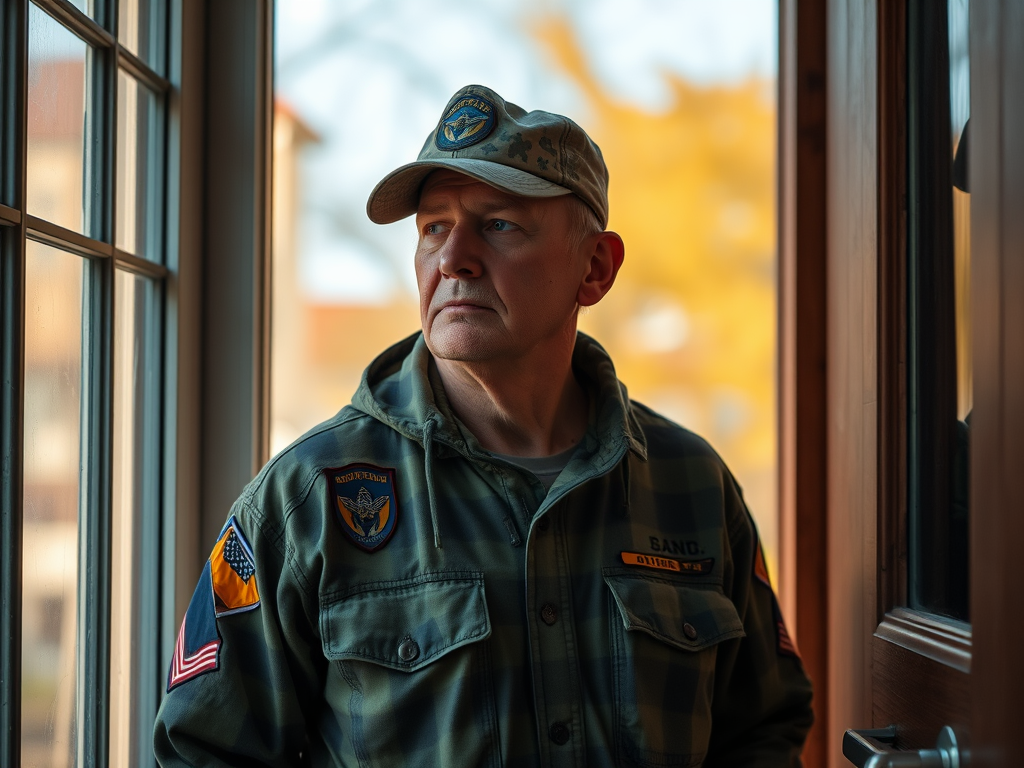
Repeated checking and security rituals in a veteran with PTSD often develop when the nervous system treats ordinary uncertainty—such as an unlocked door, an unfamiliar sound, or a dark window—as a possible threat. Checking may briefly lower fear, but the relief can teach the brain that another inspection is needed, allowing the ritual to expand. A useful response is to separate reasonable safety measures from repeated reassurance, record the pattern, and discuss it with a trauma-informed clinician. Gradual changes should be planned rather than forced, especially when sleep loss, substance use, suicidal thoughts, aggression, or immediate danger are present. Family members can support treatment without repeatedly confirming that everything is safe.
How Security Rituals Develop After Trauma
Repeated checking usually reflects a threat system that remains activated after the original danger has passed. A veteran may inspect doors, windows, cameras, weapons storage, smoke alarms, vehicles, or sleeping family members because the brain is trying to prevent a feared event before it happens. The behavior can look deliberate and security-focused, yet its intensity may be driven by fear, intrusive memories, nightmares, or a persistent expectation that danger is close.
The cycle often follows a recognizable sequence. A trigger creates uncertainty: a noise outside, a delayed text, a change in the neighborhood, or the transition from daylight to sleep. The person checks a lock or perimeter and feels temporary relief. Because the relief arrives immediately, the brain learns that checking is the way to control danger. The next trigger then produces a stronger urge, and one inspection may become several rounds.
For example, a veteran might lock the front door at bedtime, return to test it three more times, check the windows, review the camera feed, and To wrap up ask a partner to confirm the house is secure. Nothing new may be found during those later checks, but the ritual still feels necessary because the goal has shifted from finding a real problem to reaching a feeling of certainty. Complete certainty is not available, so the ritual has no natural stopping point.
This pattern does not mean the veteran is irrational or intentionally difficult. It also does not automatically establish a separate diagnosis such as obsessive-compulsive disorder. Trauma-related hyperarousal, compulsive reassurance seeking, sleep disturbance, medication effects, and other conditions can overlap. A clinician should assess the full picture rather than labeling the behavior from one symptom.
Readers tracking when a veteran’s PTSD causes repeated checking and security rituals should note what happens immediately before and after each episode. The time, trigger, number of checks, level of distress, and short-term relief provide more useful information than debating whether the feared event was objectively likely.
Reasonable Precautions Versus a PTSD-Driven Cycle
A security routine becomes more concerning when it is excessive for the setting, difficult to stop, or disruptive to sleep, work, relationships, and ordinary activities. Locking a door once, confirming that a stove is off, or following a planned home-safety routine can be sensible. Rechecking the same item until exhaustion, missing appointments to patrol the property, or requiring family members to provide repeated reassurance suggests that fear is controlling the routine.
The distinction is not based only on the number of checks. A person in a high-risk situation may need specific precautions, while someone in a secure environment may still experience severe distress from a single trigger. The more useful questions are whether the action responds to new information, whether it has a defined stopping rule, and whether the person can postpone it without an escalating panic response.
Consider two bedtime routines. In the first, a veteran checks the doors, confirms the alarm is set, and goes to bed within a planned period. In the second, the veteran checks the same latch repeatedly, watches the driveway for hours, and wakes the household to verify that no one heard a sound. Calling both routines “being careful” misses the functional difference: the first is a bounded precaution, while the second is maintained by anxiety relief.
Family members can accidentally strengthen the cycle. Repeatedly saying “I promise the door is locked” may calm the veteran for a few minutes, but it can make reassurance part of the ritual. Refusing to discuss safety at all can also backfire if there is a genuine concern or if the refusal feels punitive. A better approach is to agree in advance on one factual confirmation, then redirect attention to the planned next activity.
A brief record can clarify the pattern:
- What triggered the urge?
- What safety action was completed?
- How many extra checks followed?
- How long did the relief last?
- What did the ritual cost in sleep, time, or family conflict?
That information helps distinguish an environmental safety problem from a fear-maintained habit and gives a trauma-informed provider concrete material for treatment planning.
A Safer Way to Reduce Repeated Checking
Reducing checking works best when it is planned, gradual, and connected to professional care rather than imposed during a moment of intense fear. The first task is to define a reasonable safety routine. For instance, a household might agree that doors and windows will be checked once, the alarm will be set, and any equipment will be stored according to its established safety plan. The routine should address actual hazards without adding repeated inspections for reassurance.
The next step is to identify one manageable change. Someone checking a door six times may first practice stopping after five, or delay the next check by a few minutes while using a grounding activity. A clinician may help build a more structured exposure-based plan, but the pace should account for trauma symptoms, dissociation, panic, sleep deprivation, and the veteran’s ability to remain oriented. Abruptly removing every coping behavior can produce overwhelming distress and may damage trust.
Grounding is most useful when it shifts attention to present evidence rather than becoming another ritual. Naming the date, describing five visible objects, feeling both feet on the floor, slowing the exhale, or reading a prepared statement such as “The alarm is set; the urge is a trauma alarm, not new evidence” may help create space before acting. Repeating the statement dozens of times until certainty arrives would simply turn grounding into another compulsion.
Signs that a change is working include a shorter checking episode, a greater ability to tolerate uncertainty, less disruption to sleep, and fewer requests for family reassurance. The veteran does not need to feel completely calm before ending a routine. Waiting for absolute calm can keep the ritual in charge. Conversely, a plan is failing if distress becomes unmanageable, safety equipment is neglected, the person begins using alcohol or drugs to settle down, or conflict and sleep loss worsen.
Practical priorities can be kept narrow:
- Address any real and immediate hazard once, using ordinary safety procedures.
- Record the urge and delay or reduce only the repetitive part that follows.
- Use a grounding method without asking others to provide endless certainty.
- Review the result with a qualified clinician and adjust the plan.
The aim is not careless behavior. It is learning that a completed precaution can remain completed even when the body continues to signal danger.
Treatment, Family Support, and Warning Signs
A trauma-informed mental health assessment is appropriate when checking rituals are persistent, expanding, or impairing daily life. A provider may explore PTSD symptoms, obsessive-compulsive features, depression, traumatic brain injury, sleep problems, medication changes, pain, and substance use. Treatment choices depend on that assessment. Evidence-based PTSD therapies may address the underlying trauma response, while cognitive-behavioral approaches can examine threat interpretations, reassurance seeking, and avoidance. The presence of checking does not determine one universal treatment.
Medication decisions belong with a qualified prescriber. A veteran should report new or worsening agitation, unusual energy, severe insomnia, substance use, or changes that began after a medication adjustment. Stopping prescribed medication abruptly can create its own risks. A primary care clinician, VA mental health service, community provider, or veteran-support organization can help coordinate evaluation when access is complicated.
Family support should combine respect with boundaries. A partner might say, “We checked the doors according to our plan. I will not repeat the check, but I can sit with you while the urge passes.” That response acknowledges distress without treating every feared possibility as evidence. Families should not handle weapons, confront suspected intruders, or physically block a veteran who is frightened. If there is an immediate threat, seek emergency help and follow local safety procedures.
Urgent attention is warranted when the veteran expresses suicidal intent, threatens someone, becomes unable to care for basic needs, is severely sleep deprived, experiences confusion or hallucinations, or appears likely to use a weapon in response to a perceived threat. In the United States, the Veterans Crisis Line can be reached by calling 988 and pressing 1, texting 838255, or using its official online chat. Emergency services are appropriate when there is immediate danger.
One useful starting point is a neutral appointment summary: describe the most common trigger, the longest checking episode, the effect on sleep and relationships, any reassurance demands, and what has already been tried. That is more actionable than simply reporting that the veteran is “overreacting.” Guidance on when a veteran’s PTSD causes repeated checking and security rituals should always preserve legitimate safety while targeting the repetitive fear response.
Frequently Asked Questions
Is repeated checking always a sign of PTSD?
No. PTSD may contribute to checking, but anxiety, obsessive-compulsive symptoms, sleep problems, medication effects, or actual safety concerns may also be involved. A clinician can assess the pattern.
Should family members keep reassuring a veteran?
Give one factual confirmation when appropriate, then avoid repeating reassurance as a ritual. A prearranged boundary can acknowledge distress while encouraging treatment skills.
How can someone tell whether a check is reasonable?
Ask whether it responds to new information, has a clear stopping point, and fits the actual setting. Rechecking without new evidence and major disruption are warning signs.
Can checking be reduced without stopping all safety routines?
Yes. A person can preserve a defined, sensible safety routine while gradually reducing the repeated inspections that follow it. A clinician should help when distress is substantial.
When is urgent help needed?
Seek urgent help for suicidal thoughts, threats, weapon-related danger, severe confusion, hallucinations, inability to care for basic needs, or an immediate risk to anyone’s safety.
Conclusion
Repeated security rituals deserve attention when they consume time, damage sleep, or require constant reassurance, even when they began as understandable efforts to stay safe. Preserve legitimate precautions, define where they end, and track the triggers and consequences of the extra checking. A trauma-informed clinician can determine whether PTSD, obsessive-compulsive symptoms, sleep disruption, medication changes, or another factor is driving the pattern and can build a gradual plan suited to the veteran. Family members can be compassionate without becoming part of the ritual. Safety takes priority if weapons, suicidal thoughts, severe confusion, or immediate threats are present. The next practical move is to document one typical episode and bring that account to a qualified provider.